

The Importance of Commercial HVAC Maintenance for Business Continuity
 "The Importance of Commercial HVAC Maintenance for Business Continuity")
A commercial HVAC system does much more than keep a building warm in the winter and cool during the summer. It can influence employee comfort, indoor air quality, equipment performance, inventory conditions, energy use, customer experiences, and the ability of a facility to remain operational.
When heating, cooling, ventilation, or refrigeration equipment fails unexpectedly, the impact can spread quickly. Employees may be unable to work safely or comfortably. Customers and tenants may need to leave. Temperature-sensitive materials can be damaged. Production schedules can be interrupted, and facility managers may be forced to arrange an emergency repair while business operations are already under pressure.
That is why commercial HVAC maintenance should be viewed as part of a broader business continuity strategy—not simply another building expense.
A planned maintenance program allows potential problems to be identified before they develop into emergencies. It helps commercial and industrial facilities improve system reliability, support a safer working environment, reduce unexpected downtime, and make more informed decisions about repairs and equipment replacement.
What Does Business Continuity Mean for a Commercial Facility?
Business continuity is an organization’s ability to maintain essential operations during a disruption and return to normal activity as efficiently as possible.
Many business continuity plans focus on cybersecurity, electrical outages, severe weather, supply chain interruptions, and emergency communications. However, the systems that maintain the physical environment of a facility are equally important.
Depending on the building and its operations, an HVAC failure may affect:
- Indoor temperatures and humidity
- Ventilation and indoor air quality
- Employee health, comfort, and productivity
- Customer and tenant experiences
- Server rooms and electronic equipment
- Manufacturing processes
- Refrigerated products or temperature-sensitive inventory
- Building pressure and exhaust requirements
- Production schedules and operating hours
- Compliance with internal safety or facility standards
In an office, the loss of air conditioning during a summer heat wave may make working conditions uncomfortable and lead to complaints or temporary closure. In a warehouse, a heating failure could affect employees, stored products, pipes, or loading operations. For a manufacturer, problems with process heating or ventilation could bring part of a production line to a stop.
The exact consequences differ between facilities, but the underlying risk is the same: when an HVAC system is essential to operations, unexpected failure can become a business interruption.
Preventive Maintenance Improves HVAC Reliability
Commercial HVAC equipment often operates for long hours under demanding conditions. Rooftop units are exposed to changing weather, debris, moisture, snow, ice, and temperature extremes. Boilers, unit heaters, ventilation systems, exhaust equipment, refrigeration systems, and process heating equipment may be required to operate consistently throughout a busy season or production cycle.
Normal use causes parts to wear, connections to loosen, filters to become loaded, and heat-transfer surfaces to collect dirt. Drainage problems, electrical deterioration, control issues, refrigerant concerns, unusual vibration, and airflow restrictions may begin gradually and remain unnoticed until the system can no longer maintain the required conditions.
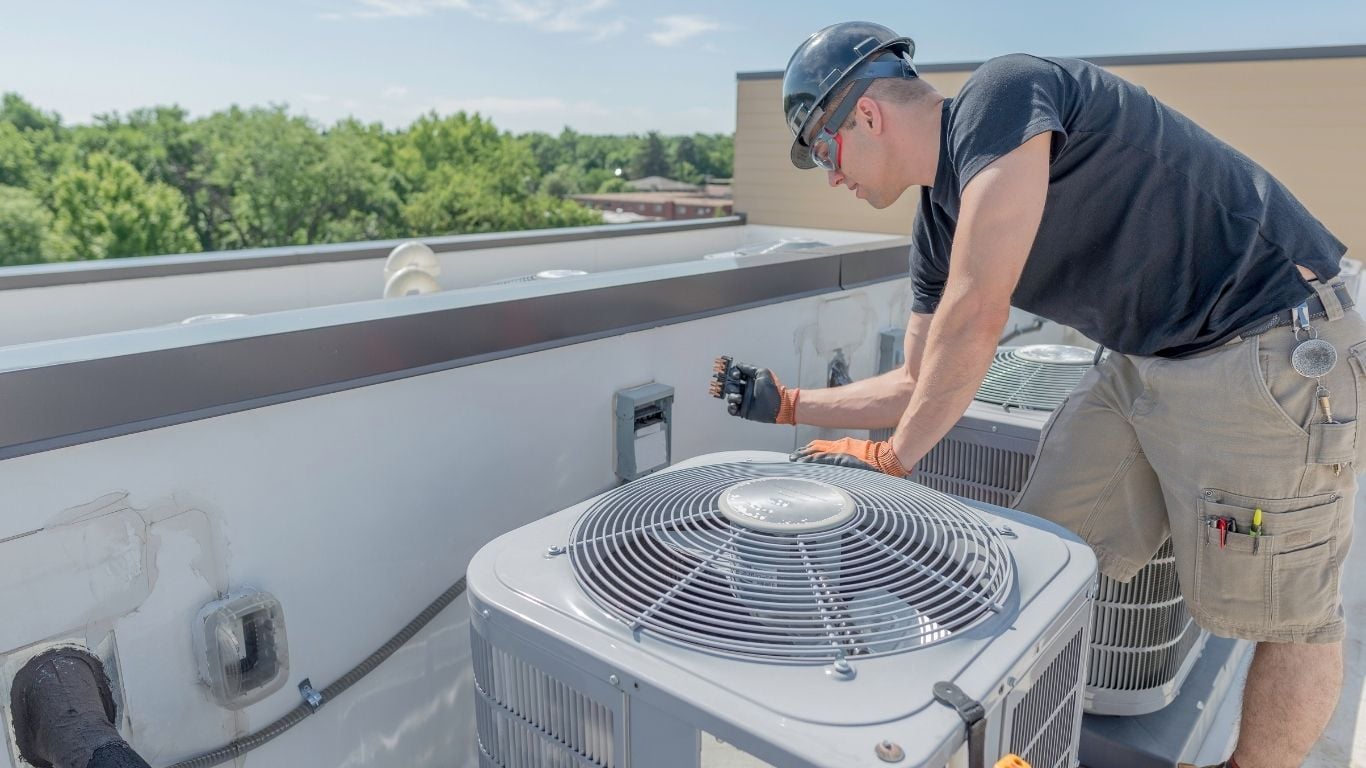
Preventive maintenance gives a qualified technician an opportunity to find these developing problems while they may still be manageable.
Depending on the type of equipment and the needs of the facility, a commercial HVAC maintenance visit may include:
- Inspecting heating, cooling, and ventilation equipment
- Checking belts, bearings, motors, fans, and moving components
- Inspecting electrical connections, contactors, and controls
- Checking filters and identifying restricted airflow
- Examining coils and other heat-transfer surfaces
- Checking condensate drains and looking for water leakage
- Reviewing operating pressures and temperatures
- Inspecting burners, ignition components, and combustion systems
- Looking for corrosion, physical deterioration, or unusual wear
- Testing thermostats, sensors, safety controls, and system sequences
- Listening for abnormal sounds and checking for excessive vibration
- Confirming that equipment starts, operates, and shuts down correctly
- Documenting equipment condition and recommended corrective work
Not every problem can be predicted, and maintenance cannot eliminate all risk. However, routinely inspecting and servicing equipment can reduce the likelihood that an overlooked issue will become an avoidable failure.
Reduced Downtime Is One of the Most Valuable Benefits
Emergency HVAC repairs rarely occur at a convenient time. Equipment can fail during a heat wave, a deep freeze, a busy retail period, an important production run, or outside regular business hours.
An emergency response may also take longer when the required replacement part is not immediately available or when technicians must first diagnose equipment with limited maintenance history.
Planned maintenance helps reduce downtime in several ways.
Problems Can Be Addressed Before Complete Failure
A worn belt, deteriorating motor, restricted filter, blocked drain, damaged electrical component, or inconsistent sensor may not immediately stop the system. These early warning signs can sometimes be detected during scheduled maintenance and corrected before they cause a larger interruption.
Service Can Be Scheduled Around Operations
When a concern is found proactively, facility managers may be able to arrange the repair during a less disruptive period. Work can potentially be coordinated around shifts, tenant schedules, production requirements, deliveries, or planned shutdowns.
Parts and Resources Can Be Prepared in Advance
Advance notice gives the service provider time to identify suitable parts, determine the labour required, and plan access to the equipment. This can make the eventual repair more organized and efficient.
Facility Managers Have Better Information
Maintenance records show which components have been serviced, which problems are recurring, and which units may be approaching the end of their useful life. This information helps management prioritize capital spending and avoid being surprised by a failing piece of equipment.
For a commercial facility, preventing even one significant interruption may save far more than the cost of routine maintenance.
Commercial HVAC Maintenance Supports Workplace Safety
HVAC and ventilation systems can contribute directly to the safety of a commercial or industrial environment.
Heating equipment may use natural gas or another fuel source. Ventilation and exhaust systems may be responsible for controlling heat, moisture, fumes, dust, odours, or other airborne contaminants. Mechanical equipment also contains electrical components, moving parts, high-temperature surfaces, pressurized refrigerant circuits, and drainage systems.
Poorly maintained equipment may create concerns such as:
- Overheating electrical components
- Damaged wiring or loose electrical connections
- Combustion or venting problems
- Water leakage near equipment or occupied areas
- Inadequate exhaust or make-up air
- Excessive heat or cold in working spaces
- Poor humidity control
- Restricted airflow
- Unusual equipment vibration
- Deteriorating mechanical components
- Unexpected equipment shutdowns
Maintenance provides an opportunity to inspect these conditions and recommend repairs where necessary.
The Canadian Centre for Occupational Health and Safety identifies improperly or inadequately maintained heating and ventilation systems as one possible contributor to workplace indoor air quality problems. It also describes a healthy indoor environment as one that provides appropriate temperature, humidity, air circulation, and outdoor air while limiting unacceptable contaminants.
The precise HVAC and ventilation requirements for a facility will depend on the building, its equipment, the work being performed, and the regulations or standards that apply. Businesses with specialized processes should have their systems assessed according to their specific operating and safety requirements.
Better Ventilation and Indoor Air Quality
Commercial HVAC maintenance is also important for maintaining proper airflow throughout a building.
Filters that are heavily loaded with dust and debris can restrict airflow. Dirty coils may reduce heat transfer. Malfunctioning dampers, fans, sensors, or controls can affect how outdoor and conditioned air moves through the facility. Drainage and humidity problems may also contribute to uncomfortable or unhealthy indoor conditions.
Possible signs of an HVAC or ventilation problem include:
- Persistent odours
- Rooms that feel stuffy
- Excessive dust
- Hot and cold areas
- Condensation or unusual moisture
- High or low humidity
- Frequent employee comfort complaints
- Weak airflow from vents
- HVAC equipment running for unusually long periods
These symptoms do not always have a single cause, but they should not be ignored. An HVAC professional can inspect the equipment and determine whether system operation, ventilation, filtration, controls, or maintenance deficiencies may be contributing to the concern.
Proper maintenance is particularly important in facilities where ventilation is used to control contaminants generated by commercial or industrial activities. The system must be suitable for the application and kept in operating condition so that supply, exhaust, and make-up air continue to perform as intended.
Maintenance Helps Protect Inventory, Equipment, and Processes
Not every commercial space can tolerate major temperature or humidity fluctuations.
Refrigerated products, food ingredients, electronics, pharmaceuticals, manufacturing materials, documents, and other sensitive inventory may require specific environmental conditions. Server rooms and electrical spaces can also generate significant heat and may depend on reliable cooling.
For some businesses, the HVAC system is closely connected to the production process itself. A failure involving process heating, refrigeration, exhaust, or make-up air can stop work even when the rest of the building remains accessible.
A maintenance program should therefore be based on operational priorities rather than using the same generic checklist for every property.
Facility managers should identify:
- Which HVAC assets are essential to continued operation
- Which areas cannot tolerate temperature changes
- Whether the facility has redundant equipment
- How long operations can continue after a system failure
- Which parts are difficult to obtain
- Whether temporary heating or cooling would be practical
- Which systems affect safety, products, or production
- Who should be contacted when an alarm or failure occurs
This risk-based approach helps direct maintenance resources toward the equipment with the greatest effect on business continuity.
Improved Efficiency Can Lower Operating Costs
A poorly maintained HVAC system may have to operate longer or work harder to deliver the required heating, cooling, or airflow. Restricted filters, dirty heat-transfer surfaces, incorrect controls, damaged components, and poor airflow can all affect performance.
Natural Resources Canada recommends regular HVAC maintenance and cleaning or replacing dirty filters as part of making a building more energy efficient.
Maintenance can help a system operate closer to its intended condition, but it is important to keep expectations realistic. The amount of energy saved will depend on factors such as:
- Equipment type and age
- Existing system condition
- Building envelope
- Operating schedule
- Temperature setpoints
- Occupancy patterns
- Control strategies
- Outdoor conditions
- Facility processes
- Previous maintenance practices
A maintenance inspection can also uncover operating conditions that deserve further investigation, such as simultaneous heating and cooling, inappropriate schedules, incorrect setpoints, or equipment that runs when a building is unoccupied.
Over time, service records and energy data can help a facility identify changes in performance and determine whether further repairs, control improvements, recommissioning, or equipment upgrades should be considered.
Proactive Maintenance Can Extend Equipment Life
Commercial HVAC equipment is a significant capital investment. Although every system will eventually require replacement, avoidable strain and unresolved mechanical problems can contribute to premature deterioration.
For example, restricted airflow may cause equipment to work harder. A worn belt can affect fan performance. A small drainage problem may eventually cause water damage or corrosion. A loose electrical connection can deteriorate further under repeated operation.
Addressing these conditions early may help reduce unnecessary stress on the system and support a longer, more dependable service life.
Maintenance records also help distinguish between an isolated repair and a pattern of repeated failures. If a unit requires frequent service, uses excessive energy, struggles to maintain conditions, or has increasingly unavailable parts, replacement may become the more practical long-term decision.
Because the problem has been documented over time, management can budget and plan for that replacement instead of making a rushed capital decision during an emergency.
Documentation Strengthens Facility Planning
Detailed maintenance records are particularly valuable in facilities with multiple HVAC assets.
A useful equipment inventory may include:
- Equipment type and location
- Manufacturer, model, and serial number
- Filter type and size
- Approximate age
- Condition at the time of inspection
- Maintenance completed
- Repairs recommended
- Parts replaced
- Recurring problems
- Photographs of the equipment
- Priority level for future work
Reliable Mechanical can assist with annual or seasonal equipment audits and provide records of equipment details, filter sizes, model and serial numbers, and photographs. Its commercial maintenance programs also include detailed service summaries following maintenance visits.
This documentation makes it easier to track equipment across a facility, confirm what work has been completed, prepare maintenance budgets, and share accurate information when service is required.
It may also be helpful when responsibilities change. If a facility manager leaves or a new property management company takes over, organized records provide continuity and reduce the need to reconstruct the building’s service history.
How Often Should Commercial HVAC Equipment Be Serviced?
There is no single maintenance schedule that is correct for every commercial building.
The appropriate frequency depends on:
- Equipment type
- Manufacturer recommendations
- Operating hours
- Equipment age and condition
- Seasonal demands
- Building occupancy
- Facility use
- Environmental conditions
- Dust, grease, moisture, or airborne contaminants
- The operational consequences of equipment failure
- Regulatory, insurance, or internal requirements
Some systems may only require service before the main heating or cooling season. Equipment that operates continuously, supports a critical process, or works in a demanding industrial environment may need more frequent attention.
Reliable Mechanical offers annual maintenance packages for industrial HVAC equipment, with quarterly and semi-annual service options available. A customized schedule allows the maintenance program to reflect the equipment, operating environment, and continuity needs of the business.
Warning Signs That Should Not Wait Until the Next Visit
Scheduled maintenance does not replace the need to respond when equipment begins behaving abnormally. Facility staff should report warning signs promptly, including:
- Unusual banging, grinding, rattling, or squealing
- Burning or fuel-like odours
- Repeated breaker trips
- Unexpected equipment cycling
- Difficulty maintaining temperature
- Weak or uneven airflow
- Water around HVAC equipment
- Frost or ice where it should not be present
- Sudden increases in energy consumption
- Control alarms or error codes
- Excessive vibration
- Persistent humidity or condensation
- Frequent system resets
- Employee or tenant complaints concentrated in one area
If there is concern about gas, smoke, carbon monoxide, fire, electrical danger, or another immediate hazard, employees should follow the facility’s emergency procedures, leave the affected area when appropriate, and contact the proper emergency or utility service.
Building HVAC Maintenance into a Continuity Plan
An effective business continuity plan should explain what happens before, during, and after an HVAC failure.
Consider including the following:
- Identify critical equipment. Determine which units support essential areas, sensitive materials, refrigeration, server rooms, ventilation, or production.
- Maintain an updated equipment inventory. Record equipment locations, specifications, filter sizes, service history, and condition.
- Establish a preventive maintenance schedule. Base service frequency on manufacturer guidance, equipment use, operating conditions, and the consequences of failure.
- Assign internal responsibilities. Employees should know who receives alarms, who can authorize repairs, and who communicates with tenants, customers, or management.
- Keep the service provider’s contact information accessible. Do not leave important contact details in the files of one unavailable employee.
- Plan for extreme weather. Consider how the facility would respond to a heating failure during a deep freeze or a cooling failure during a heat warning.
- Review redundancy and temporary options. Identify whether operations can move to another area or whether temporary equipment could support essential functions.
- Budget for aging equipment. Use inspection findings and repair history to plan replacements before reliability becomes unacceptable.
- Review the plan regularly. Update it when equipment, building use, staffing, or production requirements change.
This preparation can help a business respond more calmly and effectively when a problem occurs.
Keep Your GTA Facility Operating with Reliable HVAC Maintenance
Commercial HVAC maintenance is ultimately about controlling risk.
It supports reliable heating, cooling, ventilation, refrigeration, and process systems. It helps protect employees, customers, equipment, inventory, and property. Most importantly, it reduces the likelihood that a manageable equipment problem will become a costly operational emergency.
Reliable Mechanical Services Inc. has supported commercial and industrial clients for over 30 years. The team maintains and repairs all makes and models and provides maintenance solutions for equipment such as rooftop units, refrigeration systems, boilers, make-up air units, ventilation systems, unit heaters, air conditioning systems, and related commercial equipment.
Customized maintenance contracts are available with annual, semi-annual, or quarterly service options. Reliable Mechanical also provides detailed service reports, handles the scheduling of planned maintenance visits, and offers contract customers access to after-hours emergency service 24/7.
To discuss a commercial HVAC maintenance program for your building, manufacturing facility, warehouse, retail property, or industrial operation, request a quote from Reliable Mechanical or call 905-457-2665.
| Tags:HVAC MaintenanceCommercial HVAC |