

The Complete Guide to Commercial HVAC Maintenance for GTA Businesses
 "The Complete Guide to Commercial HVAC Maintenance for GTA Businesses")
Commercial buildings throughout the Greater Toronto Area depend on heating, cooling and ventilation systems every day. Whether a property is an office, retail store, warehouse, manufacturing plant, restaurant, medical facility, school or multi-unit commercial building, its HVAC equipment plays an essential role in maintaining comfortable temperatures, supporting indoor air quality and keeping operations running.
When that equipment is neglected, the effects can extend far beyond an uncomfortable room. A failing rooftop unit may interrupt business during the hottest week of summer. A heating problem can put pipes, inventory or temperature-sensitive processes at risk during a winter cold snap. Poor ventilation can create stuffy conditions, odours, pressure problems or complaints from employees and visitors. An unexpected breakdown can also force a business to make urgent repair decisions at the worst possible time.
That is why commercial HVAC maintenance should be treated as an operational priority rather than a task that is postponed until something stops working. A structured maintenance program helps identify developing problems, preserve system performance and give facility managers a clearer understanding of the condition of their equipment.
This guide explains what commercial HVAC maintenance includes, how frequently different systems may require attention and how preventative HVAC maintenance can help GTA businesses control costs, reduce disruption and plan more effectively.
What Is Commercial HVAC Maintenance?
Commercial HVAC maintenance is the planned inspection, cleaning, testing and servicing of the equipment used to heat, cool, ventilate and control the indoor environment of a commercial or institutional property.
Depending on the building, this may include:
- Rooftop HVAC units
- Furnaces
- Boilers
- Commercial air conditioners
- Heat pumps
- Air handlers
- Unit heaters
- Tube heaters
- Exhaust fans
- Make-up air units
- Steam humidifiers
- Commercial refrigeration equipment
- Ductwork
- Thermostats and building controls
- Process heating equipment
Maintenance is not the same as repairing a system after it has failed. Repairs are reactive: a problem has already occurred, and a technician is called to diagnose and correct it.
Preventative HVAC maintenance is proactive. Equipment is inspected according to a planned schedule so that wear, contamination, incorrect operation and other concerns can be addressed before they develop into larger failures.
A proper building HVAC maintenance program should be based on the equipment installed, its age and condition, the way the property is used, its number of operating hours and the manufacturer’s recommendations. It should also account for the conditions in which the equipment operates.
A lightly used office does not place the same demands on its HVAC equipment as a busy restaurant, dusty manufacturing plant, refrigerated facility or warehouse with loading doors that open throughout the day.
ASHRAE Standard 180 establishes minimum inspection and maintenance practices intended to preserve thermal comfort, energy efficiency and indoor air quality in commercial buildings. One of the important principles behind this approach is that maintenance should consider the HVAC system as a whole, not simply as a collection of unrelated components.
Why HVAC Maintenance Is Especially Important in the GTA
Commercial heating and cooling equipment in the Greater Toronto Area must operate through significant seasonal changes. Hot, humid summer weather can place sustained demand on cooling equipment, while freezing winter temperatures make dependable heating essential. Spring and fall can bring rapid temperature swings that cause systems to alternate between operating modes.
Outdoor equipment also faces rain, snow, ice, windblown debris, airborne dirt and periods of high humidity. Rooftop units are particularly exposed because they operate outside throughout the year.
Even equipment that appears to be running normally may gradually lose performance as filters load with debris, coils collect dirt, belts wear, drains become obstructed or controls drift away from their intended settings. These changes are not always immediately noticeable, but they can increase equipment strain and contribute to reduced performance.
Commercial properties also tend to have more complex operating requirements than homes. Different areas of a building may have different schedules, occupancy levels and temperature needs.
A warehouse, for example, may include offices, loading areas, production spaces and storage zones under one roof. A restaurant must balance kitchen exhaust with an appropriate amount of replacement air. Manufacturing facilities may require ventilation or process heating in addition to ordinary occupant comfort. Institutional buildings may need consistent conditions across classrooms, treatment areas, public spaces or administrative offices.
Because of these demands, commercial HVAC services need to address both the equipment and the operational needs of the facility it serves.
What Does Commercial HVAC Maintenance Include?
The exact work performed during a maintenance visit depends on the system, season and service agreement. However, a comprehensive commercial HVAC maintenance program commonly includes the following areas.
Equipment Inventory and Condition Assessment
A strong maintenance program begins with knowing what equipment is installed throughout the property. A commercial HVAC company can help create or update an inventory containing information such as:
- Equipment type and location
- Manufacturer, model and serial number
- Approximate equipment age
- Heating or cooling capacity
- Filter sizes and quantities
- Refrigerant type, where applicable
- General equipment condition
- Known repairs or recurring concerns
- Photographs of the equipment
This information gives property owners and facility managers a reliable reference when ordering filters, planning service, reviewing repair histories or considering future capital replacements. It can be especially valuable for properties with multiple rooftop units or equipment spread across several mechanical rooms and buildings.
Reliable records also make it easier to distinguish an isolated repair from an ongoing pattern. If the same unit repeatedly experiences motor, belt, control or refrigerant problems, its history may indicate that a more substantial repair or planned replacement should be considered.
An accurate equipment inventory can also improve communication between facility managers, service technicians and other contractors. Instead of referring to “the rooftop unit over the warehouse,” each piece of equipment can be assigned a clear identification number that corresponds with service reports, photographs and repair records.
Air Filter Inspection and Replacement
Filters help protect HVAC equipment and remove particles from the air passing through the system. As dirt accumulates, airflow can become restricted. The system may then need to work harder to move air through the building, while occupied areas may receive less effective heating, cooling or ventilation.
Filters should be inspected regularly and changed according to their condition, application and manufacturer guidance. A standard calendar interval does not work for every facility.
Buildings with construction dust, manufacturing particles, high occupancy, frequent door openings or demanding indoor air quality requirements may need filter attention more often than a clean, lightly occupied office.
Maintenance personnel should also confirm that the correct filter size and type are installed. Filters must fit properly so air cannot easily bypass their edges. Installing a higher-efficiency filter without considering the system’s airflow requirements can also create problems, so filter selection should be based on the equipment design and facility needs.
Evaporator and Condenser Coil Maintenance
Evaporator and condenser coils transfer heat and are central to the performance of cooling and heat-pump systems. Dirt and debris on coil surfaces can interfere with heat transfer and airflow.
Outdoor condenser coils may collect leaves, dust, pollen and other material, while indoor evaporator coils can accumulate contaminants that pass through or around the filtration system. Grease, industrial particles and other airborne material can create additional challenges in certain commercial environments.
Coils should be inspected and cleaned when needed using appropriate methods that do not damage their fins or other components. Technicians may also inspect for corrosion, physical damage, icing and other conditions that could point to airflow or refrigeration problems.
Bent coil fins, blocked outdoor units and debris around rooftop equipment should also be addressed. Adequate airflow around the equipment is necessary for effective heat transfer and reliable operation.
Belts, Bearings, Motors and Fans
Many commercial HVAC systems rely on belts, pulleys, bearings, motors and fan assemblies to move air through the equipment and building.
Belts can loosen, crack or wear over time. Misalignment can increase wear and affect performance. Bearings may require lubrication when the equipment design calls for it, while motors should be assessed for proper operation.
During planned maintenance, a technician may:
- Inspect belt condition and tension
- Check pulleys for wear and alignment
- Examine fan assemblies
- Look for loose or damaged components
- Listen for unusual noises
- Check for excessive vibration
- Lubricate applicable components
- Review motor operation
Addressing a worn belt during a planned visit is generally much less disruptive than dealing with a failed belt after airflow has stopped. Unusual noises and vibration can also provide early warning of mechanical problems that may otherwise become more expensive.
Electrical Components and Connections
Commercial HVAC systems contain contactors, relays, capacitors, disconnects, wiring, motors, control boards and other electrical components. Heat, vibration, moisture and normal operation can all contribute to wear or loose connections.
A qualified technician may inspect electrical connections, check component condition and take operating measurements where appropriate. Safety devices and disconnects should also be considered as part of the equipment’s maintenance requirements.
Damaged wiring, overheating components, worn contactors and loose connections can contribute to unreliable operation and unexpected shutdowns. Electrical work must always be performed by properly qualified personnel and in accordance with applicable safety requirements.
Thermostats, Sensors and Building Controls
Even mechanically sound equipment can waste energy or create comfort problems when thermostats, sensors, timers or building controls are not working correctly.
A sensor that reads the wrong temperature can cause unnecessary heating or cooling. An outdated occupancy schedule may keep equipment operating when the building is empty. Poorly coordinated zones may cause parts of the system to heat and cool against one another.
Maintenance should include checking relevant control settings, operating schedules and sensor performance. Facilities with a building automation or energy management system may also benefit from reviewing alarms, equipment trends and overrides.
Persistent manual overrides can sometimes reveal an unresolved comfort or control problem. Rather than repeatedly changing setpoints, the facility should investigate why the normal operating schedule is not meeting the building’s needs.
Refrigerant Circuit and Cooling Performance
Air conditioners, heat pumps and refrigeration systems depend on a properly functioning refrigerant circuit. Maintenance may include inspecting accessible lines and components, checking operating conditions and looking for signs of leakage, damage or abnormal performance.
Low refrigerant should not automatically be treated as a routine “top-up.” A sealed system does not normally consume refrigerant in the way that a vehicle consumes fuel. If a shortage is confirmed, the underlying cause should be investigated and handled by qualified refrigeration personnel in accordance with applicable environmental and safety requirements.
Signs of a potential refrigeration problem can include reduced cooling, ice formation, unusually long operating cycles, changing temperatures or abnormal system pressures. Prompt diagnosis can help protect major components such as the compressor.
Condensate Drains and Drain Pans
Cooling equipment removes moisture from the air, producing condensate that must drain away correctly. Dirt, biological buildup, damage or poor drainage can lead to blocked lines and overflowing pans.
The result may be water damage, equipment shutdowns, ceiling stains or conditions that support unwanted microbial growth.
Drain pans, traps and condensate lines should be inspected and cleaned as required. Technicians should also look for corrosion, standing water and evidence that drainage problems have occurred between visits.
Burners, Ignition Systems and Heat Exchangers
Heating maintenance may involve inspecting burners, ignition components, flame-sensing devices, venting, safety controls and heat exchangers, depending on the equipment. Proper combustion and safe venting are critical to the performance and safety of a commercial heating system.
Heat exchangers deserve particular attention because their condition affects both equipment operation and building safety. Suspected damage, unusual combustion results or signs of venting problems require prompt professional assessment.
Gas-fired equipment should never be serviced by unqualified personnel. A commercial HVAC technician can inspect the equipment for visible deterioration, confirm that safety controls are working and identify conditions that may require repair or additional testing.
Ductwork, Dampers and Air Distribution
The central equipment is only one part of a building’s HVAC system. Ductwork, diffusers, grilles, dampers and other air-distribution components determine whether conditioned and ventilation air reaches the intended spaces.
Inspections may identify:
- Damaged or disconnected duct sections
- Deteriorated duct insulation
- Blocked supply or return grilles
- Stuck or incorrectly positioned dampers
- Air leakage
- Excessive dirt or debris
- Poor airflow to individual zones
- Unbalanced air distribution
Problems within the distribution system can create hot and cold spots even when the rooftop unit or air handler appears to be operating normally. This is why building HVAC maintenance should consider the entire system rather than focusing exclusively on the heating or cooling equipment.
If employees repeatedly complain that one part of the building is too hot while another is too cold, the problem may involve airflow, zoning, controls or ductwork rather than a lack of heating or cooling capacity.
Ventilation, Exhaust and Make-Up Air Systems
Commercial and industrial buildings often use exhaust fans to remove heat, odours, moisture, fumes or airborne contaminants. When air is exhausted from a building, replacement air must be introduced in a controlled way.
Make-up air units help replace exhausted air and maintain more appropriate pressure relationships within the building. Without sufficient replacement air, the property may develop negative pressure.
Signs of building pressure problems can include:
- Exterior doors that are difficult to open
- Strong drafts around doors and windows
- Odours moving between different areas
- Reduced exhaust performance
- Cold air entering through openings
- Whistling sounds around doorways
- Uncomfortable temperature variations
Commercial HVAC maintenance should consider exhaust fans, make-up air units, outdoor-air dampers, filters, motors, belts, controls and related heating components.
This area is particularly important in restaurants, manufacturing operations, automotive facilities, warehouses and other buildings where process or occupancy needs create substantial exhaust requirements.
Ventilation equipment must operate as part of a balanced system. Increasing exhaust without providing sufficient replacement air can create additional problems rather than improving indoor conditions.
Commercial Equipment That Should Be Included in a Maintenance Plan
Every facility has a different equipment mix. A commercial HVAC maintenance plan may need to cover several different types of heating, cooling, refrigeration and ventilation equipment.
Rooftop HVAC Units
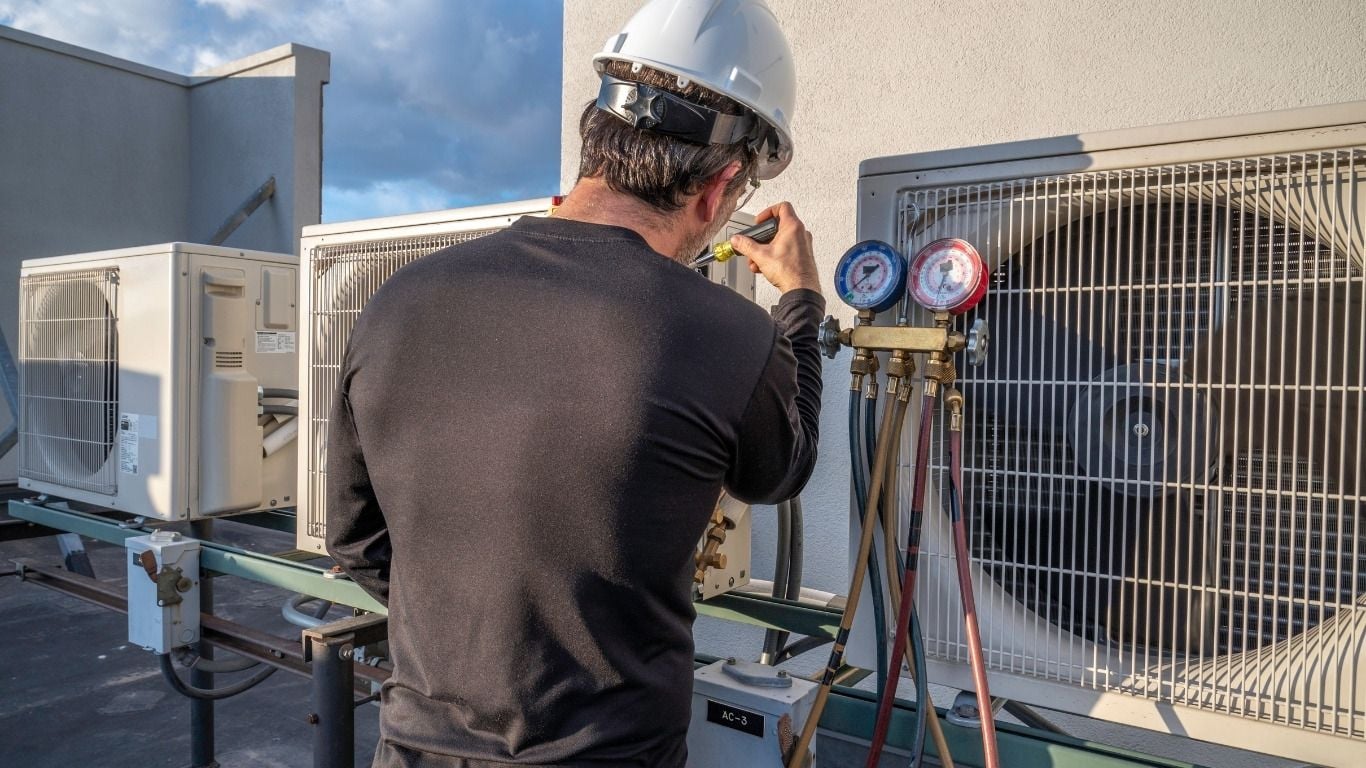
Packaged rooftop units are common in offices, retail buildings, warehouses, restaurants and multi-tenant commercial properties. Because a single cabinet can contain heating, cooling, airflow and ventilation components, a rooftop unit inspection may include:
- Filters
- Evaporator and condenser coils
- Belts and pulleys
- Fans and motors
- Burners and ignition components
- Heat exchangers
- Condensate drains
- Electrical components
- Thermostats and controls
- Outdoor-air dampers
- Cabinet panels and seals
Technicians should also look for weather-related damage, loose panels, deteriorated seals and debris around outdoor-air openings. Roof access and safe working procedures must be considered when service is planned.
Rooftop units are exposed to GTA weather throughout the year. Snow, ice, rain, windblown debris and temperature changes can all affect equipment condition. Seasonal inspections provide an opportunity to identify damage before the equipment enters its period of highest demand.
Properties with multiple rooftop units should use a consistent equipment identification system. Each unit should be assigned a number or label that corresponds with service reports, photographs and repair records.
Commercial Boilers and Hydronic Systems
Commercial boilers may provide space heating, domestic hot water or support for certain industrial processes. Maintenance needs vary by boiler type and system design, but service may involve:
- Burners and ignition components
- Venting systems
- Circulation pumps
- Valves
- Temperature and pressure controls
- Safety devices
- System water conditions
- Expansion tanks
- Visible piping and connections
- Operating controls
Hydronic equipment should be evaluated as a complete system. A well-maintained boiler cannot deliver proper heat if pumps are failing, valves are stuck, controls are inaccurate or air is preventing circulation through parts of the building.
Facility managers should also report unusual pressure changes, water leaks, inconsistent heating, new noises or repeated control resets. These conditions may indicate problems that should not wait until the next scheduled maintenance visit.
Make-Up Air Units and Exhaust Systems
Make-up air and exhaust equipment should be maintained together because their operation is closely connected.
Inspections can address:
- Filters
- Fans and blower assemblies
- Belts and motors
- Outdoor-air and control dampers
- Heating components
- Electrical connections
- Thermostats and sensors
- Exhaust fan operation
- Building pressure concerns
- The amount of replacement air being delivered
A make-up air unit that is not operating correctly may affect much more than indoor temperature. It can interfere with exhaust performance, create drafts, affect door operation and cause odours to move into areas where they do not belong.
Unit Heaters and Tube Heaters
Warehouses, workshops, loading areas and industrial buildings often rely on unit heaters or radiant tube heaters. These systems may operate in demanding environments and should be included in the facility’s preventative HVAC maintenance schedule.
Maintenance may include burners, ignition systems, fans, venting, reflectors, mounting components, gas connections and safety controls, as applicable.
Because these heaters may be installed high above the floor, problems are not always obvious to employees or facility staff. Unusual noises, inconsistent heat or visible deterioration should be reported promptly.
Commercial Refrigeration Equipment
Businesses that store food, beverages, pharmaceuticals or other temperature-sensitive goods require dependable refrigeration.
Commercial refrigeration maintenance may include:
- Evaporator and condenser coils
- Fans and motors
- Condensate drains
- Door seals and gaskets
- Electrical components
- Temperature controls
- Defrost systems
- Refrigerant lines and components
- Operating temperatures
- Signs of leakage or icing
Because a refrigeration failure can threaten inventory and interrupt operations, these systems may require closer monitoring and more frequent service than ordinary comfort-cooling equipment.
Facility staff should maintain temperature records where required and respond promptly when temperatures begin moving outside their normal range. Waiting for a complete refrigeration failure can increase the risk of product loss and emergency repair costs.
Process Heating and Specialized Industrial Equipment
Manufacturing facilities can use direct, indirect, electric, fuel-fired, steam-based or hybrid process heating systems.
These systems may support:
- Food processing
- Automotive manufacturing
- Electronics production
- Textile operations
- Cosmetic manufacturing
- Drying processes
- Ovens and kilns
- Other temperature-dependent production
Process heating equipment should have a maintenance program designed around the process, operating environment, production schedule, safety requirements and manufacturer guidance.
A general commercial building maintenance schedule may not be sufficient for equipment that supports continuous or critical production. The maintenance provider should understand how the system affects the wider operation and coordinate service around planned shutdowns or periods of reduced production.
How Often Should Commercial HVAC Equipment Be Serviced?
There is no single service interval that is correct for every commercial building. Frequency should be established using:
- Manufacturer recommendations
- Applicable codes and standards
- Equipment type and condition
- System age
- Operating hours
- Facility environment
- Seasonal demands
- Maintenance history
- System criticality
- The consequences of equipment failure
ASHRAE’s commercial maintenance framework uses an equipment inventory and applicable task lists to build a facility-specific program. That is a more reliable approach than assuming that every component only needs one annual visit.
The following schedule provides a useful planning framework, but it should be adjusted by a qualified commercial HVAC company for the individual property.
Monthly or Ongoing Facility Checks
Basic checks can be performed between professional maintenance visits by trained facility personnel.
These may include:
- Reviewing control-system alarms
- Checking occupied-space temperatures
- Listening for unusual equipment noises
- Looking for visible water or refrigerant leaks
- Confirming that supply and return grilles are unobstructed
- Watching for unexpected equipment shutdowns
- Reviewing refrigeration temperatures
- Noting changes in energy consumption
- Checking for unusual odours
- Recording employee or tenant comfort complaints
Filters may need monthly inspection in high-use, dusty or process-intensive environments. Critical refrigeration and production equipment may require much more frequent monitoring.
Facility staff should document unusual conditions rather than repeatedly resetting equipment or overriding controls without investigating the cause. A system that regularly requires manual intervention is often indicating that an underlying problem needs attention.
Quarterly Commercial HVAC Maintenance
Quarterly service is common for many commercial and industrial facilities, particularly those with equipment that operates for long hours or supports important business functions.
A quarterly visit can provide opportunities to review:
- Filter condition
- Belts and pulleys
- Drain pans and condensate lines
- Evaporator and condenser coils
- Fans, motors and bearings
- Electrical components
- Thermostats and controls
- Refrigeration performance
- Heating components
- Overall equipment condition
Quarterly maintenance may be appropriate for restaurants, retail properties, multi-tenant buildings, manufacturing facilities, warehouses and institutional properties. It can also be useful for sites with multiple rooftop units or equipment that runs throughout much of the day.
However, the precise task list should change with the season rather than repeating an identical inspection four times per year. A spring visit should place greater emphasis on cooling preparation, while a fall visit should focus more closely on heating readiness.
Semi-Annual or Seasonal Maintenance
At a minimum, many commercial comfort systems benefit from focused service before the main cooling and heating seasons.
Spring maintenance prepares air-conditioning equipment for summer demand, while fall maintenance prepares heating equipment for winter.
A spring commercial HVAC maintenance visit may emphasize:
- Condenser and evaporator coils
- Refrigeration system performance
- Condensate drainage
- Fans and blower assemblies
- Belts and pulleys
- Electrical components
- Cooling controls
- Outdoor equipment condition
- Airflow
- Thermostat schedules
A fall visit may place greater emphasis on:
- Burners and ignition systems
- Heat exchangers
- Venting
- Heating controls
- Safety devices
- Gas-fired equipment
- Freeze-related concerns
- Unit heaters and tube heaters
- Boiler operation
- Building heating schedules
Seasonal timing matters. Discovering a failing component before the first major heat wave or cold snap gives the business more time to make a planned decision. It may also make it easier to schedule repairs before the equipment is operating under maximum demand.
Annual Maintenance and Planning Tasks
Some inspections, testing, reporting activities and system-wide reviews may be scheduled annually.
Annual tasks can include:
- Updating the equipment inventory
- Reviewing service and repair histories
- Identifying repeated equipment failures
- Assessing the general condition of major systems
- Reviewing building-control schedules
- Evaluating maintenance frequency
- Identifying equipment approaching replacement
- Developing a prioritized capital plan
- Reviewing changes in building occupancy or use
Annual planning should not be confused with servicing every component only once per year. Filters, refrigeration systems, heavily used equipment and critical components may require attention much more frequently.
The annual review is an opportunity to look beyond individual service calls and assess the overall condition of the building’s heating, cooling, ventilation and refrigeration systems.
When More Frequent Maintenance Is Appropriate
A customized HVAC maintenance contract may call for shorter service intervals when:
- Equipment operates continuously or for extended hours
- The facility contains dust, grease, fibres or airborne process contaminants
- Indoor temperature is critical to inventory, production or occupant care
- The building has high or variable occupancy
- Loading doors open frequently
- Equipment is older or has a history of recurring problems
- Refrigeration protects perishable or valuable products
- The HVAC system supports laboratories, healthcare areas or specialized processes
- A breakdown would stop production or close the facility
- The property has demanding ventilation or exhaust requirements
The cost and operational impact of failure should influence maintenance frequency. Equipment supporting a mission-critical process deserves a different strategy from a unit serving a seldom-used storage room.
How Planned HVAC Maintenance Helps Reduce Operating Costs
Preventative HVAC maintenance requires a budget, but it can help control several larger and less predictable expenses. The purpose of a maintenance plan is not simply to keep equipment running. It is to support reliable, efficient operation while giving the business more control over repairs, scheduling and long-term equipment decisions.
Supporting Energy-Efficient HVAC Operation
Dirty filters, obstructed coils, worn belts, incorrect schedules and malfunctioning controls can make commercial HVAC equipment work harder or operate longer than necessary.
Maintenance helps restore appropriate airflow, heat transfer and control. A typical maintenance visit may include checking thermostat settings, inspecting electrical connections, servicing moving components, examining condensate drainage and confirming that the system responds correctly to its controls.
A clogged filter, for example, can restrict airflow and place additional strain on fans and motors. A dirty condenser coil can interfere with the cooling system’s ability to release heat. An inaccurate thermostat or outdated occupancy schedule can cause equipment to operate when heating or cooling is not required.
Maintenance cannot make old or improperly sized equipment perform like a new high-efficiency system. It can, however, help existing equipment operate closer to its intended condition and make performance problems easier to identify.
Finding Developing Problems Before They Become Emergencies
Many major HVAC failures begin as smaller changes.
A belt starts cracking. A bearing becomes noisy. A drain begins to slow. A contactor shows signs of wear. A coil becomes increasingly obstructed. A sensor begins reporting inaccurate temperatures. None of these concerns may cause an immediate shutdown, but they can eventually contribute to equipment failure.
Planned inspections provide opportunities to identify these conditions before the affected component fails completely or damages other parts of the system.
Not every breakdown can be prevented. Commercial equipment can still fail unexpectedly, particularly as it ages. However, proactive service can reduce avoidable surprises and improve the likelihood that repairs are completed on a planned schedule.
When a developing problem is found early, the facility manager may have time to obtain approval, order parts, coordinate access and schedule the work around business operations.
Reducing Business Disruption and Downtime
The indirect cost of an HVAC failure can exceed the repair invoice.
A restaurant may lose comfortable dining conditions during a busy service period. A retailer may receive customer complaints. A warehouse may struggle to protect temperature-sensitive stock. A manufacturing operation may need to slow or stop production. An office may need to send employees home. An institutional facility may have difficulty maintaining appropriate conditions for occupants.
Emergency breakdowns can also affect tenants, deliveries, scheduled events and customer service.
Scheduled maintenance can be arranged around business hours, production cycles, tenant needs and roof-access requirements. Emergency work offers far less control over timing.
For industrial facilities, planned maintenance can sometimes be coordinated with production shutdowns or periods of reduced activity. This allows technicians to inspect and service equipment with less disruption to the operation.
Extending the Useful Life of Commercial HVAC Equipment
Commercial heating and cooling equipment represents a significant capital investment. Keeping components clean, properly adjusted and repaired when problems are still manageable can reduce unnecessary strain and support longer service life.
For example:
- Correct airflow can reduce strain on fans and motors.
- Clean coils can support effective heat transfer.
- Proper belt tension can reduce wear.
- Clear condensate drains can help prevent water-related damage.
- Correct control settings can reduce unnecessary operating hours.
- Prompt repairs can prevent one failed component from affecting another.
Maintenance cannot eliminate normal ageing, corrosion or equipment obsolescence. Every system will eventually require replacement. However, a consistent maintenance program can help prevent premature deterioration caused by neglect.
Improving HVAC Budget Forecasting
Detailed service records allow owners and facility managers to see which systems are reliable, which require increasing repair spending and which may be approaching replacement.
That information supports more accurate capital planning.
Instead of discovering during an emergency that several rooftop units are near the end of their useful lives, a business can prioritize replacements over multiple budget cycles. Planned replacement also provides more time to evaluate efficiency, capacity, controls and operational requirements.
Useful maintenance records may reveal:
- Equipment requiring frequent repairs
- Units with obsolete or difficult-to-source parts
- Systems with declining performance
- Recurring comfort complaints
- Equipment nearing the end of its expected service life
- Opportunities to coordinate several replacements
- Systems that may benefit from upgraded controls
A clear repair and maintenance history helps businesses compare the cost of continuing to repair an older unit with the potential benefits of replacement.
Supporting Employee, Customer and Tenant Comfort
Temperature complaints are not always minor inconveniences. Persistent hot and cold areas can affect employee concentration, customer experience, tenant satisfaction and the suitability of certain spaces.
In a retail store or restaurant, uncomfortable conditions may discourage customers from staying. In an office, they can lead to repeated complaints and portable heaters or fans being used throughout the building. In an industrial facility, excessive heat or inadequate ventilation may affect working conditions.
Commercial HVAC maintenance supports comfort by addressing airflow, controls, heating, cooling and ventilation performance.
When complaints occur, service records can help determine whether they are related to a recent equipment problem, a recurring issue or a change in building use.
Supporting Indoor Air Quality
HVAC maintenance is one part of a broader indoor air quality strategy.
Filter condition, outdoor-air systems, drain pans, humidity-control equipment and ventilation performance can all affect the indoor environment. Poorly maintained equipment may contribute to dust, odours, excess moisture, inadequate ventilation or inconsistent humidity.
Maintenance can help by:
- Replacing or cleaning filters when required
- Inspecting drain pans and condensate lines
- Checking outdoor-air dampers
- Servicing exhaust and make-up air equipment
- Identifying standing water
- Reviewing ventilation operation
- Inspecting steam humidifiers and related controls
- Addressing airflow concerns
HVAC maintenance alone cannot solve every indoor air quality problem. Building materials, cleaning practices, occupant activities, moisture sources and outdoor contaminants may also need to be considered. However, a properly maintained HVAC system is an important part of maintaining a healthier and more comfortable facility.
What Should an HVAC Maintenance Contract Include?
An HVAC maintenance contract should clearly define the equipment covered, visit frequency, tasks performed and documentation provided. Business owners should not assume that all agreements include the same level of service.
A commercial HVAC maintenance agreement may include:
- An inventory of covered equipment
- Planned quarterly, semi-annual or seasonal visits
- Equipment-specific inspection and maintenance tasks
- Filter supply and replacement terms
- Written reports following each visit
- Operating measurements and noted deficiencies
- Equipment photographs where useful
- Repair recommendations prioritized by urgency
- Service-history tracking
- Procedures for requesting additional repairs
- Details of after-hours or emergency support
- Clearly stated exclusions
The agreement should be customized around the property. A warehouse with rooftop units and tube heaters has different needs from a restaurant with refrigeration, kitchen exhaust and make-up air equipment. A manufacturing facility with process heating will require a different program from an office building.
The contract should also explain what happens when a technician identifies a problem. Some minor adjustments may be included, while parts and additional labour may require separate authorization.
Clear communication prevents confusion and helps facility managers respond to recommendations promptly.
Look for Equipment-Specific Tasks
A maintenance agreement should do more than promise a general inspection. It should identify the equipment being serviced and, where possible, the main tasks associated with that equipment.
For example, rooftop-unit maintenance may include filters, belts, coils, fans, burners, heat exchangers, drains, electrical components and controls. Boiler maintenance will involve a different set of components and safety considerations.
The task list should also reflect the season. Cooling components require additional attention before summer, while heating systems must be prepared before winter.
Ask About Service Reports and Documentation
After each visit, the business should receive a clear service report explaining what was inspected, what work was completed and what concerns were found.
A useful report may include:
- Equipment identification
- Date and type of service
- Tasks completed
- Measurements or observations
- Filters or parts replaced
- Photographs of identified concerns
- Repairs recommended
- Urgency of each recommendation
- Technician notes
Recommendations should be clear enough for a facility manager to understand the issue and decide what action is required.
For properties with many units, consistent equipment identification is essential. Each rooftop unit, boiler, exhaust fan or air handler should have a unique label that matches the equipment inventory and service reports.
Understand Emergency and After-Hours Support
Commercial and industrial HVAC failures do not always occur during regular business hours. Businesses should understand what emergency support is available under their HVAC maintenance contract.
Important questions include:
- Is after-hours service available?
- Do maintenance customers receive priority?
- How are emergency calls requested?
- Are there separate after-hours rates?
- What information should facility staff provide?
- Are refrigeration and critical systems supported?
- Which types of emergencies can the contractor handle?
Understanding the process before an emergency occurs can save valuable time when a heating, cooling or refrigeration system stops working.
Choosing a Commercial HVAC Company in the GTA
Commercial and industrial systems require different capabilities from typical residential equipment. When evaluating a contractor, consider whether the company has experience with the types of equipment and facilities involved.
Useful questions include:
- Does the company maintain rooftop units, boilers, make-up air units, exhaust systems, refrigeration and other equipment at the property?
- Can it build a customized maintenance schedule rather than offer a generic checklist?
- Does it provide clear service reports and equipment records?
- Can it support a site with multiple systems or locations?
- Is emergency or after-hours service available?
- Are its technicians properly qualified for the work being performed?
- Can the company help identify repair priorities and long-term replacement needs?
- Does it understand commercial, industrial and institutional operating requirements?
- Can maintenance be coordinated around business or production schedules?
- Does the company service different equipment makes and models?
Price matters, but the lowest-cost visit may not provide the documentation, inspection depth or response capability a facility needs.
The goal should be a dependable maintenance relationship that helps the business understand and manage its mechanical systems.
When searching for a commercial HVAC company in the GTA, businesses should also consider the contractor’s service area. A provider familiar with GTA weather and commercial building requirements will understand the importance of preparing equipment for humid summers, freezing winters and rapidly changing seasonal conditions.
Warning Signs That Should Not Wait Until the Next Maintenance Visit
Planned maintenance does not replace prompt attention when equipment operation changes.
Contact a qualified commercial HVAC provider if employees or facility staff notice:
- Unusual grinding, squealing, rattling or banging
- Burning, gas or persistent musty odours
- Repeated breaker trips
- Unexpected equipment shutdowns
- Water around HVAC equipment
- Water stains or leaks in ceilings
- Ice on coils or refrigerant lines
- Significant hot and cold spots
- Weak or inconsistent airflow
- Unexpected increases in energy use
- Excessive dust
- Worsening air-quality complaints
- Doors that become difficult to open because of building pressure
- Heating or cooling equipment that runs continuously
- Refrigeration temperatures moving outside their required range
- Repeated control alarms
- Equipment that frequently requires manual resets
These warning signs may indicate mechanical, electrical, refrigeration, drainage, ventilation or control problems.
Gas odours, smoke, suspected combustion problems and other potential safety hazards require immediate action and should be handled according to the facility’s emergency procedures. Occupants should not attempt to inspect or repair potentially dangerous equipment themselves.
Steps GTA Businesses Can Take Between Professional Visits
Facility managers and employees can help support a commercial HVAC maintenance program by paying attention to changes in building conditions.
Between professional visits, businesses can:
- Keep supply and return grilles clear.
- Avoid storing materials against HVAC equipment.
- Monitor and document comfort complaints.
- Review building-control alarms.
- Check for visible leaks or water damage.
- Record refrigeration temperatures where required.
- Report unusual noises or odours.
- Keep rooftop and mechanical-room access clear.
- Update the HVAC provider when building use changes.
- Maintain organized equipment and service records.
Employees should know who to contact when they notice a problem. A small change reported early may be easier to address than a concern that is ignored until the equipment shuts down.
Businesses should not remove panels, access electrical components, handle refrigerants or attempt gas-equipment repairs unless the work is being performed by appropriately qualified personnel.
Build a More Reliable Commercial HVAC Maintenance Strategy
Effective commercial HVAC maintenance is not simply a filter change or an annual look at the rooftop equipment. It is a planned process that combines equipment records, scheduled inspections, seasonal preparation, qualified service and clear reporting.
For GTA businesses, that planning is particularly important because HVAC systems must perform through humid summers, freezing winters and rapidly changing shoulder seasons.
A customized maintenance program can help:
- Maintain dependable commercial heating and cooling
- Identify developing equipment problems
- Reduce the risk of disruptive failures
- Support more efficient system operation
- Improve comfort and indoor air quality
- Create better equipment records
- Improve repair and replacement budgeting
- Prepare systems for seasonal demand
The right frequency and scope will depend on the property. A small commercial office, multi-tenant retail building, manufacturing plant, warehouse, institutional facility and temperature-controlled operation will not have identical maintenance requirements.
Reliable Mechanical Services Inc. provides commercial HVAC services for businesses, industrial operations and institutional facilities throughout the GTA and surrounding communities. The team services a wide range of equipment, including rooftop units, boilers, refrigeration systems, unit heaters, make-up air units, process heating and ventilation systems.
If your facility does not have a structured maintenance plan—or if your current agreement no longer reflects your equipment and operational needs—contact Reliable Mechanical Services Inc. to discuss a customized HVAC maintenance contract.
A proactive plan today can help keep your building comfortable, efficient and prepared for the demands of every season.
| Tags:Commercial HVACPreventative HVAC MaintenanceCommercial Heating and CoolingFacility ManagementEnergy EfficiencyGTA Businesses |